Energy costs continue to rise across industries, commercial buildings, and infrastructure projects. Organizations are increasingly turning to IoT-based smart energy management systems to gain visibility into energy usage, optimize consumption, and reduce operational expenses. By leveraging connected sensors, smart meters, and real-time analytics, businesses can make informed decisions that improve both efficiency and sustainability. SenseLive EMS delivers sub-metering, dashboards, and alerts tailored for Indian industrial and commercial sites.
What is Smart Energy Management?
Smart energy management is the process of monitoring, analyzing, and optimizing energy consumption using connected technologies and data analytics. IoT-powered systems collect real-time data from electrical panels, HVAC plant, lighting circuits, manufacturing equipment, and renewable energy assets. When this information is centralized on a single platform, teams can see where energy is used, when demand spikes occur, and which assets deserve priority for retrofit or control changes.
How IoT Enables Smart Energy Management
Real-Time Energy Monitoring
IoT sensors continuously measure voltage, current, power factor, total consumption, and demand patterns across a site. Instant visibility replaces guesswork: facility managers no longer wait for monthly bills to discover inefficiencies. Instead, they can drill into shifts, floors, or machines and compare performance against targets or historical baselines.
Automated Energy Optimization
Smart systems can adjust lighting schedules, modulate HVAC operation, trim peak demand, and coordinate equipment run times based on occupancy or production plans. Automation ensures savings continue outside business hours when manual oversight is limited. Over time, small adjustments across many loads compound into measurable cost reduction without sacrificing comfort or output.
Energy Analytics and Reporting
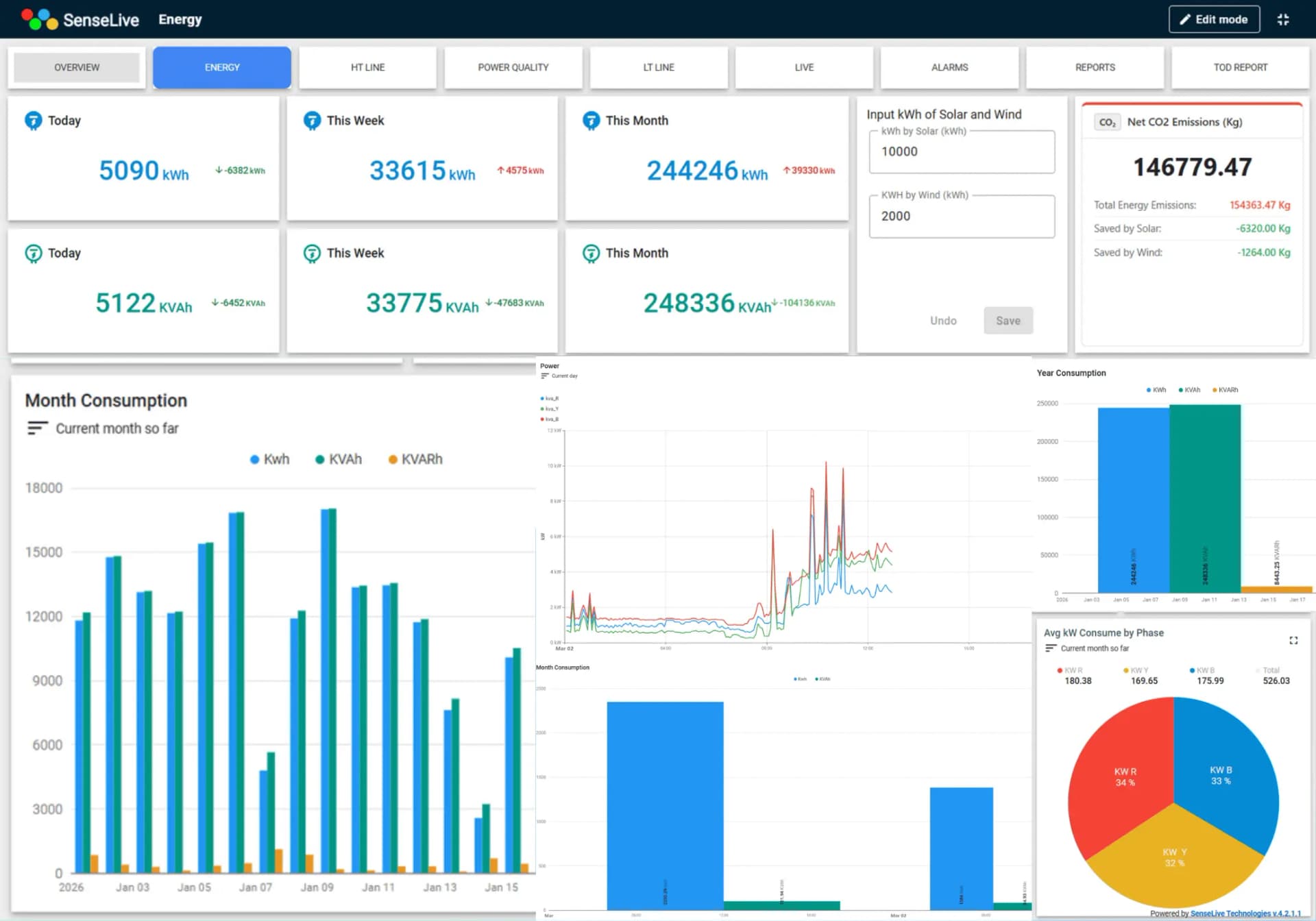
Advanced dashboards translate raw meter data into trends, consumption patterns, cost breakdowns, and carbon footprint indicators. Finance and sustainability teams can share the same reports, which makes it easier to justify capital projects and track progress toward ESG commitments. Clear reporting also simplifies audits and stakeholder communication.
Predictive Maintenance
IoT devices detect abnormal equipment behavior before failures occur, which reduces downtime, improves reliability, and avoids the energy waste associated with struggling motors, compressors, or overheating conductors. Wireless busbar monitoring is one example of how thermal and electrical anomalies are caught early so energy is not lost as heat in switchgear and distribution panels.
Benefits of IoT-Based Energy Management
Organizations that deploy IoT energy platforms typically lower bills by identifying wasteful loads and optimizing run profiles. Real-time insights speed up operational decisions because engineers see problems as they develop rather than after the fact. Sustainability and ESG programs gain credible metrics, assets run closer to their efficient operating points, and proactive demand management helps avoid expensive peak charges. Together, these outcomes turn energy from a fixed overhead into a metric the business can actively manage.
Industries Using Smart Energy Management
Manufacturers use IoT to align machine utilization with energy intensity, while commercial buildings automate lighting, HVAC, and occupancy-based control to match real use. Data centers rely on granular monitoring to balance cooling and power utilization, and utilities apply IoT for smart grid visibility and demand forecasting. Healthcare facilities face dual pressure to keep critical systems available and control utility spend; our companion article on IoT in healthcare explains how connected infrastructure supports both clinical and operational goals.
Best Practices for Implementing Smart Energy Management
A successful program begins with an accurate baseline of current consumption so improvements can be measured objectively. Sensors should be placed at the assets that drive the majority of spend, and monitoring should run continuously so anomalies are caught quickly. Predictive analytics help forecast consumption and flag equipment that is drifting out of spec, while sustainability targets should be woven into project scope from day one so technical wins translate into reported environmental progress.
Future Trends in Smart Energy Management
The sector is moving toward AI-driven optimization, smarter grids, edge analytics, digital twins of plants and buildings, and tighter integration with solar and other renewable sources. These technologies will make energy systems more adaptive, allowing sites to respond automatically to price signals, weather, and production schedules. Early adopters that standardize on open protocols and scalable gateways will find it easier to layer new capabilities without replacing their entire stack.
Conclusion
IoT-based smart energy management empowers organizations to reduce costs, improve operational efficiency, and achieve sustainability objectives. By leveraging connected sensors, analytics, and automation, businesses can transform energy from a controllable expense into a strategic advantage. To get started, explore SenseLive EMS, review IoT gateways, or request a demo for your facility.
FAQs
What is IoT energy management?
IoT energy management uses connected sensors and analytics platforms to monitor and optimize energy consumption across buildings and industrial sites. Data flows from meters and equipment to dashboards where teams can act on trends in near real time.
How can IoT reduce energy costs?
IoT reduces costs by exposing inefficiencies, automating controls, and keeping equipment within efficient operating ranges. Peak demand can also be managed more deliberately when consumption is visible minute by minute rather than only on the utility bill.
Which industries benefit from smart energy management?
Manufacturing, healthcare, commercial buildings, utilities, data centers, and smart cities all benefit because they operate large, continuous, or complex loads where small percentage savings translate into significant annual value.
What are the main components of an energy monitoring system?
A complete system typically includes smart meters, IoT sensors, gateways, cloud or on-premise dashboards, analytics software, and reporting tools that connect field data to business decisions.