Invisible Heat, Visible Savings: How SenseLive’s Wireless Busbar Monitoring Shields Switchgear, Malls, and Hospitals
Busbar hot-spots are often silent saboteurs in critical electrical infrastructure. These overheating points can lead to devastating switchgear fires, unplanned outages, and costly downtime—especially in high-stakes environments like hospitals, malls, and panel-building factories..
The Problem with Traditional Thermal Monitoring
Many facilities still rely on periodic infrared (IR) scans, which:
- Miss gradual temperature rise (thermal drift)
- Don’t offer 24/7 surveillance
- Require manual inspections
- Fail to catch early-stage degradation
The Wireless Advantage
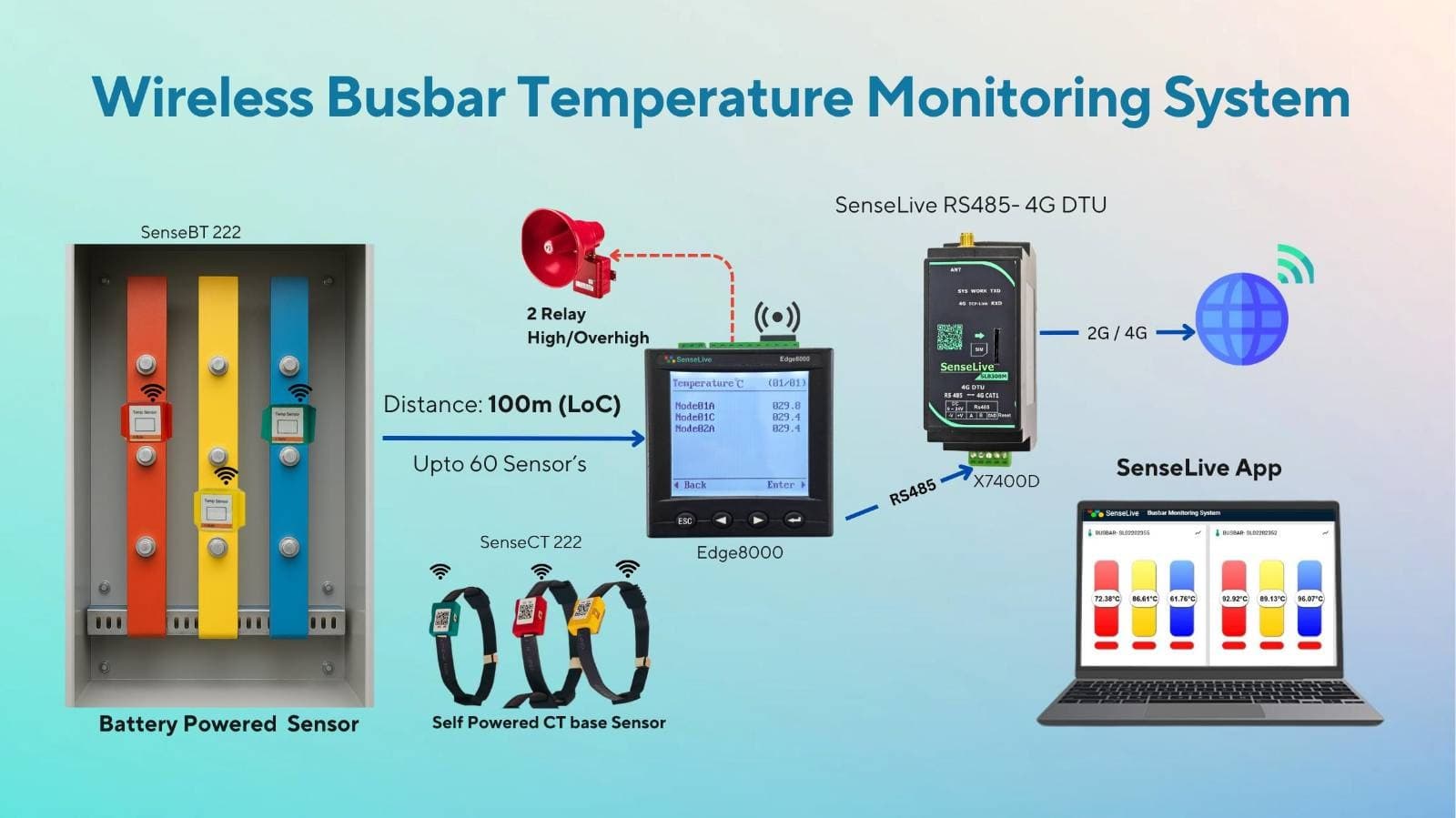
SenseLive’s Wireless Busbar Temperature Monitoring System provides continuous thermal monitoring using industrial-grade sensors. This proactive approach allows facilities to:
- Detect issues early, before they become dangerous
- Prevent downtime by scheduling maintenance ahead of failure
- Eliminate manual IR scanning, saving labor and resources
- Enhance safety, especially in environments with heavy electrical loads
Time = ₹ Money: What a Hot Busbar Really Costs
- Hospitals: ₹6–7 lakh/minute due to surgical interruptions and ICU power failures.
- Retail & Malls: ₹90 lakh/minute in lost business during blackouts (2021 data).
- Factories: ₹70 lakh/hour (ABB 2023 survey) for every production halt.
Why Periodic Thermography Falls Short
Infra-red scans done once a quarter are no match for faults that can surface and escalate within hours.
What slips through those time-gaps can burn through budgets.
| Snapshot Checks | Continuous Wireless Sensing |
|---|---|
|
Point-in-time only – you “see” the busbar for 3 seconds, then wait 90 days for the next visit. |
Always-on view – every sensor beams an updated temperature reading every few seconds. |
|
Requires shutting down panels or at least opening doors, exposing staff to live gear. |
Clamp-and-go installation; sensors mount on energised busbars without service interruption. |
|
Human-dependent – accuracy varies with operator skill and ambient conditions. |
Automated alarms – thresholds trigger SMS / SCADA alerts via open Modbus-RS-485 the moment a joint drifts a few °C. |
|
Misses slow, cumulative heating that happens between scans. |
Captures micro-trends early enough for a ₹500 spanner-tighten instead of a ₹50-lakh outage. |
SenseLive Wireless Busbar Monitoring Suite
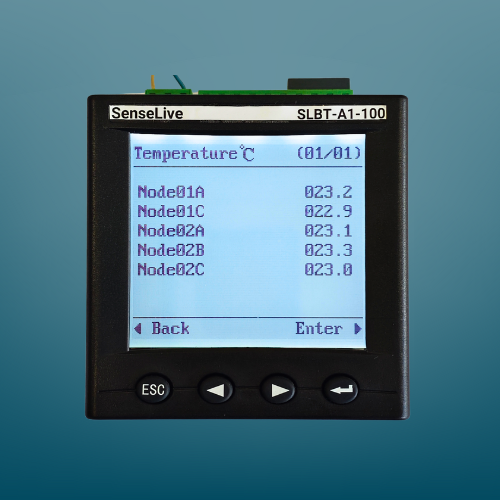
Edge8000 Gateway
Central gateway for wireless busbar temperature monitoring and alarms.
- DIN-rail mount
- Supervises 60+ sensors
- Dual-relay alarms
- Modbus-RTU integration

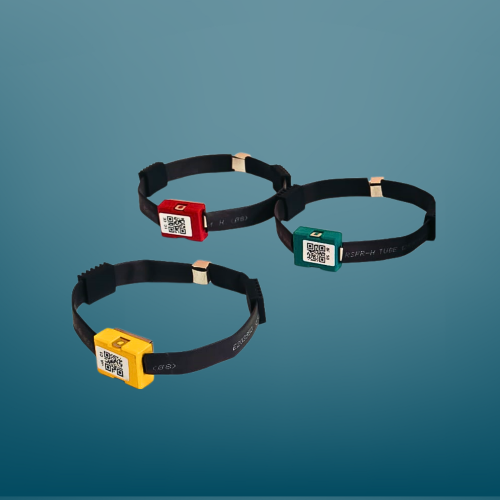
SenseBT-222 Sensor
Battery-powered wireless temperature sensor for busbar joints.
- Battery-powered (≈5 years)
- ±0.5 °C accuracy
- IP65 rated
- Wireless reach up to 100 m
SenseCT-222 Sensor
CT-powered sensor—no batteries, ideal for compact panels.
- CT-powered, no batteries
- Maintenance-free
- Ideal for OEMs & tight panels
Together, these create a real-time safety net for all high-current joints, feeders, and risers — without drilling or rewiring.
7 Reasons SenseLive Stands Apart
- NO wiring — clamp-on wireless sensors
- Dual-purpose: temperature + energy
- Built-in automation (relays/fans)
- Seamless SCADA/EMS/BMS integration
- Battery or CT-powered options
- Up to 60 sensors per Edge8000
- Built rugged for harsh switchgear zones
Deployment Roadmap
Site Survey
Identify critical electrical joints, feeders, and risers for monitoring.
Sensor Installation
Clamp on SenseBT-222 or SenseCT-222 sensors and bind to the Edge8000 Gateway.
Takes approximately 1 minute per point.
SCADA / Cloud Integration
Register the Modbus map, configure alarm thresholds, and activate dual-relay outputs.
Predict & Prevent
Get real-time alerts via mobile app or SCADA—well before traditional IR scans detect issues.
Stop guessing. Start sensing.
Contact SenseLive today to protect your power chain and prevent invisible heat from becoming visible damage.